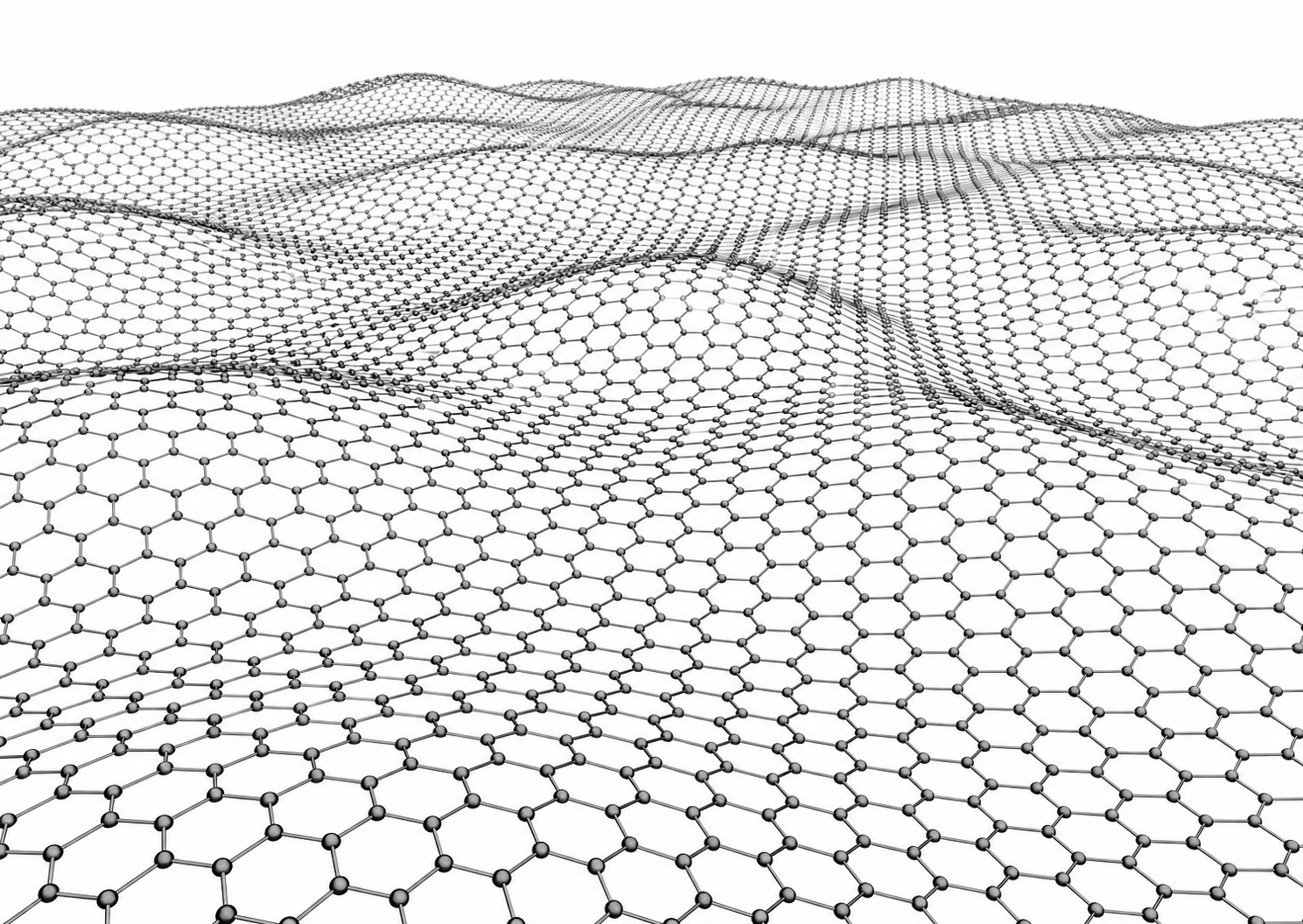
Solid State Physics
This is an introduction to solid state physics. It covers the basics of band structure, Fermi surfaces, phonons, and particles in magnetic fields. It is taught as part of the course Applications of Quantum Mechanics in Cambridge.
“I first heard of this when Fowler was explaining it to one of Rutherford’s closest collaborators, who said ‘very interesting’ in a tone which implied that he was not interested at all. Neither was I.”
Nevil Mott, recollecting the glorious moment he first learned of the difference between metals and insulators.
Particles in Magnetic Fields
Gauge field, gauge transformation; Landau levels, degeneracy; Aharonov-Bohm effect; Magnetic monopoles, Dirac quantisation; Spin in a magnetic field, spin precession.
Band Structure
Electrons in one dimension, tight-binding, nearly free electrons, Floquet matrix, Bloch's theorem; Bravais lattices, cubic, BCC and FCC, the Wigner-Seitz cell, the reciprocal lattice, the Brillouin zone; band structure, crystal momentum, crystallographic notation, nearly free electrons in 3d, tight-binding in 3d; Wannier functions, localised and extended stats, LCAO
Electron Dynamics in Solids
Fermi surfaces, metals vs insulators, graphene; Bloch electrons; effective velocity and mass, semi-classical equations of motion, Bloch oscillations, holes, Drude model; magnetic fields, cyclotron frequency, Onsager quantisation, de Haas-van Alphen oscillations.
Phonons
Monotonic chain; diatomic chain, optical and accoustic bands, Peierls instability; Quantization; Field theory.